Buying toys for babies is exciting, but for parents and caregivers, it can also be overwhelming. Shelves and online stores are filled with products labelled “baby-safe”, yet not all toys meet the safety standards that truly matter when a child is in their most vulnerable stage of development.
As a toy retailer and brand curator with over 7 years of experience sourcing high-quality branded toys globally since 2019, we have worked closely with parents, gift buyers, and caregivers across Kuwait and the Middle East. One thing has remained constant: Parents don’t just want fun toys, they want peace of mind. This guide answers one of the most searched questions by new parents:
When parents search for what toys are safe for babies, they are not looking for marketing claims they want practical safety guidance. True baby toy safety goes far beyond labels or attractive packaging. Based on years of hands-on product curation, we define safe baby toys using three real-world principles.
1. Age-Appropriate Design Matters More Than You Think
Babies grow rapidly in their first year. A toy that is safe for a crawling baby may be unsafe for a newborn.
Match a baby’s physical ability, not just age labels
Cannot fit entirely into a baby’s mouth
Do not require fine motor skills babies have not yet developed
Parents often underestimate how quickly babies start pulling, chewing, and testing toys. This is usually where unsafe toy designs fail.
2. Material Quality Is Non-Negotiable
Babies explore the world with their mouths. Every toy eventually becomes a teether.
That’s why baby-safe toys must be made only with:
Non-toxic, tested materials
Durable finishes that do not chip, peel, or flake
Fabrics and plastics that withstand repeated use and frequent cleaning
Through years of retail experience, we have learned that low-quality toys often fail after weeks of real baby use, not on day one and that delay is what makes them risky.
3. Durability Under Real Baby Play
A toy can appear safe initially and become unsafe over time.
When selecting toys that are safe for babies, we always assess:
Stitch strength on soft toys
Resistance to repeated biting, squeezing, and pulling
Whether parts loosen after normal daily handling
This durability-first approach is why carefully curated, branded baby toys consistently earn parent trust.
Safe Toy Categories for Babies (0–12 Months)
Rather than following rigid month-by-month rules, we recommend choosing toys based on developmental readiness, which is far more reliable for baby safety.
Soft Toys & Plushies: Comfort with Care
Soft toys are often a baby’s first emotional comfort item, but not all plush toys are safe for babies.
From our curation experience, baby-safe soft toys should:
Use embroidered or stitched features only (no plastic eyes or buttons)
Be lightweight and breathable
Have reinforced seams that do not loosen over time
We consistently see that premium branded plush toys remain safer longer than generic alternatives, especially after repeated washing and daily handling.
Teethers & Oral Exploration Toys
Chewing is a natural and essential part of early development. This makes teethers one of the most important toys for babies.
Safe teethers should:
Be made from trusted, baby-safe materials
Be single-piece or securely bonded
Retain shape and texture after sterilization
An insight from years of retail experience:
A teether that softens, cracks, or warps over time is no longer safe — no matter how popular it is online.
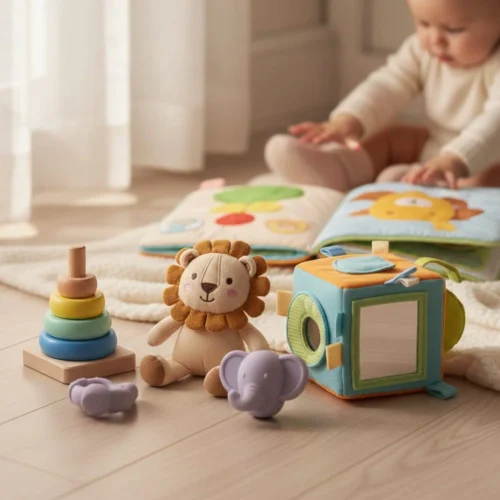
Stacking, Grasping & Early Learning Toys
Simple toys that encourage grasping, holding, and stacking help babies develop early motor skills.
The safest versions share common features:
Smooth, rounded edges
No detachable or hidden small parts
Balanced weight (not hollow or overly heavy)
Well-designed branded toys often grow with the baby, remaining safe across multiple developmental stages.
Activity Toys for Supervised Play
Activity toys with mirrors, textures, gentle sounds, and simple movements support curiosity and sensory development.
Safety guidelines we always share with parents:
Always supervise play
Inspect attachments regularly
Avoid overly complex or overstimulating designs for young babies
Safe play does not mean less fun, it means thoughtful, child-first design.
Real-World Insights: Common Baby Toy Safety Mistakes Parents Make
Through years of direct interaction with parents, a few common mistakes appear repeatedly.
Ignoring Age Recommendations
Age labels on baby toys are based on safety testing and developmental expectations. They are not suggestions.
Assuming “Soft” Means “Safe”
Soft toys can still contain risks such as weak stitching, loose threads, or hidden internal components.
Prioritizing Price Over Quality
Lower-priced toys may look acceptable initially, but safety issues often appear weeks later as wear begins.
Not Re-Checking Toys Over Time
Even high-quality baby toys should be inspected regularly as babies grow stronger and more curious.
Why Safety Standards Matter: But Curation Matters More
International safety standards exist to protect children, and we work only with brands that meet recognized baby toy safety requirements.
However, after years in the industry, we have learned an important truth:
Certification is the starting point. Consistent quality is what keeps toys safe in real homes.
Our zero-tolerance approach to unsafe products is shaped by long-term trust, not isolated incidents. Parents return to us because they know every toy has been intentionally selected, not randomly stocked.
Our Philosophy: Safe Play Builds Confident Childhoods
We believe that when toys are safe for babies:
Babies explore more freely
Parents worry less
Play becomes joyful, not stressful
This belief has guided our brand since 2019 and continues to shape how we curate baby-safe toys for families across the region.
Final Checklist: How to Choose Safe Toys for Babies
Before buying any toy for a baby, ask yourself:
Is this toy from a trusted, quality-focused brand?
Is it appropriate for the baby’s current developmental stage, not just age?
Will it remain safe after weeks of real use?
Would I confidently recommend this toy to another parent?
Choosing the right toys in the first year is not about quantity it is about safety, quality, and confidence.












Leave a comment